
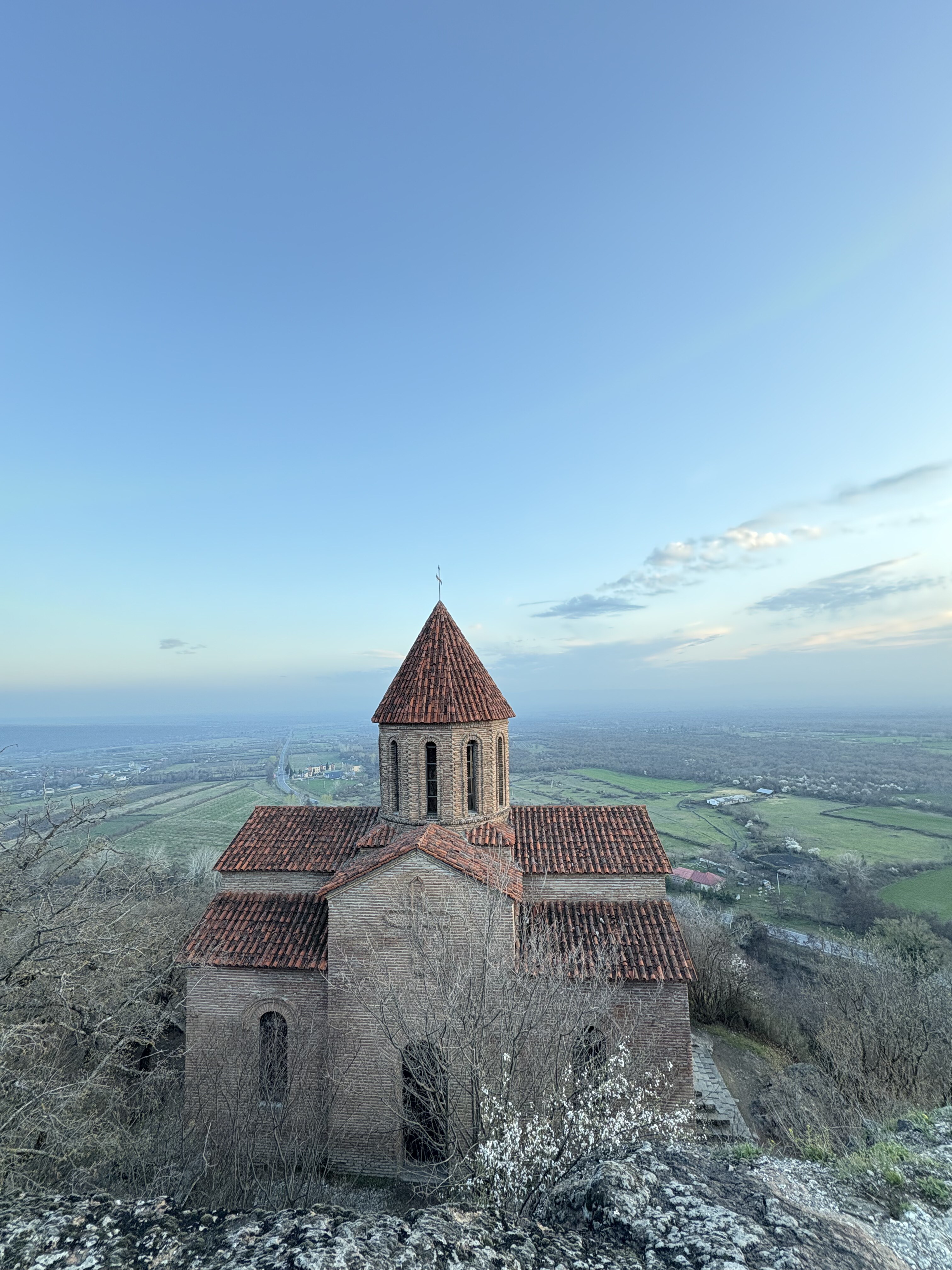
Mountain landscape above Qakh
Field Notes · 01 · Qakh

Where the road keeps its memory.

Qakh is not a collection of stops. It is a place where mountain distance, working craft, religious heritage and the timing of a meal still shape how a road is understood.

Read time

4 minutes

On the route

Qax · İlisu

Field theme

Place memory

Qakh, read slowly

To understand Qakh, start with the work a place asks of its people.

The district sits where settlement, mountain weather and movement repeatedly meet. A road may lead from a town centre to a village, but it also carries the memory of markets, seasonal routes, religious communities and the practical knowledge needed to live near the Caucasus. This journey reads the landscape through the people and structures that have given it rhythm.

The inner bazaar

A town made for weather and work.

At Qakh’s Icheribazar, authenticity is not abstract. Homes, workshops, shops and the market belong to the same working memory; applied arts, wood carving and weaving keep the place connected to daily life rather than turning it into a monument.

A useful way to arrive in Qakh is to look for the relationship between stone, trade and daily life, rather than only searching for a view. The region’s food belongs to the same rhythm: a shared meal can carry local tempo as clearly as an old wall.

İlisu

A village with a longer horizon.

İlisu carries the memory of a regional centre, its bridge and mosque keeping history close to the road without turning it into a spectacle.

Plural heritage

One road, more than one memory.

Qakh’s cultural landscape is plural. The route passes through different forms of faith, craft and settlement, each with its own continuity.

On this journey

Read it in motion.

From Torpaggala to Saribash is built to make this context legible: a station arrival, a village road, a church, İlisu, Hamamlar and a final local evening in Sarıbaş. Conditions can change, but the attention stays the same.